Free provider-neutral tool · one claim · about 10 minutes
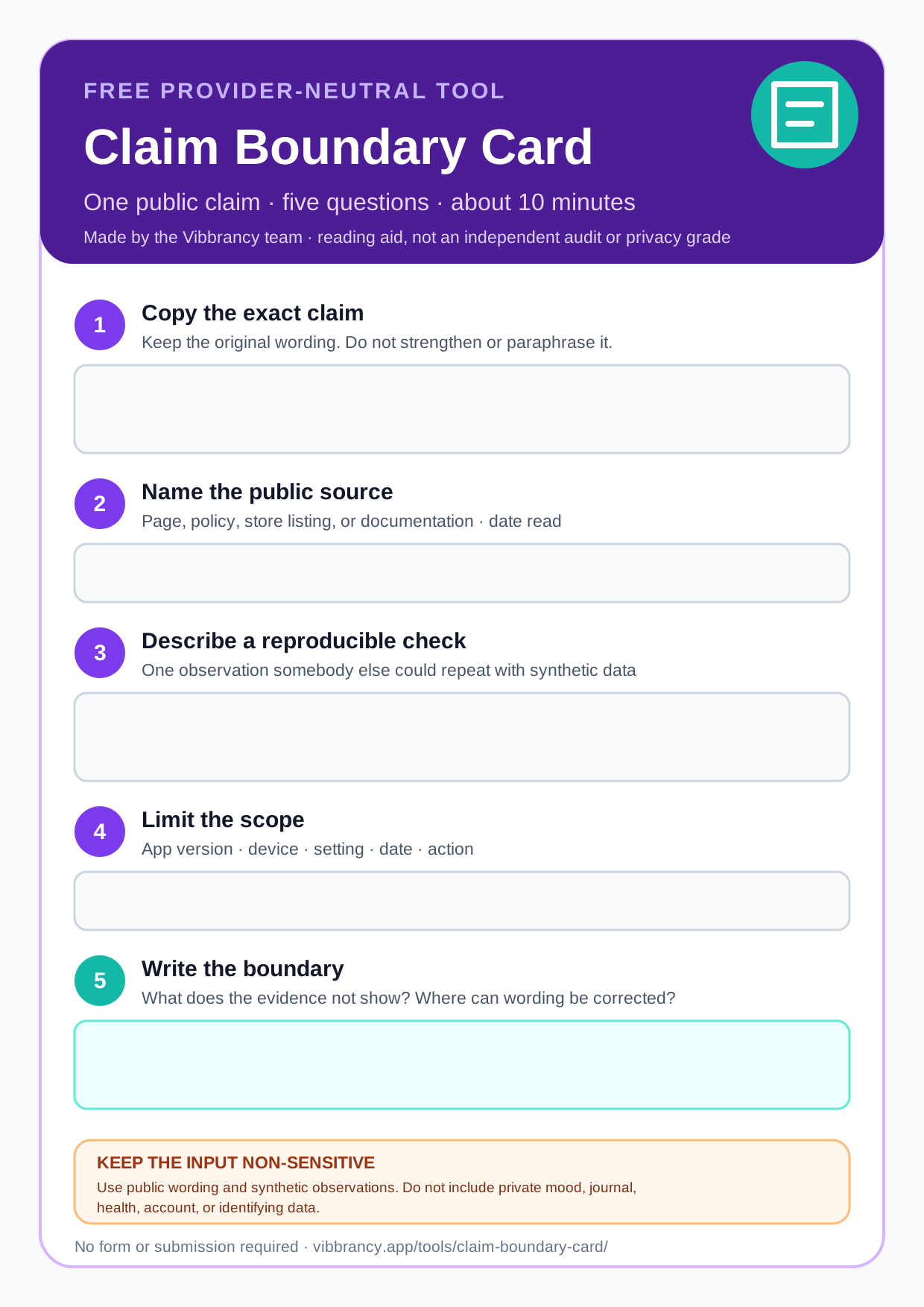
The Claim Boundary Card
Put one public app claim beside its source, a repeatable check, the scope of the evidence, and the sentence that keeps the conclusion honest.
Made by the Vibbrancy team. This is a reading and documentation aid, not an independent audit, certification, privacy grade, legal assessment, endorsement, or product comparison.
One claim in · one bounded record out
Ask five questions
- 1
Copy the exact claim
Keep the original wording. Do not strengthen, shorten, or paraphrase it.
- 2
Name the public source
Record the page, policy, store listing, or documentation and the date you read it.
- 3
Describe a reproducible check
Write one observation somebody else could repeat with synthetic data.
- 4
Limit the scope
Name the app version, device, setting, date, and action the evidence actually covers.
- 5
Write the boundary
State what the evidence does not show, then name a clear correction route.
A useful completed card
- quotes the claim rather than improving it;
- links to a dated public source;
- separates observation from inference;
- names version, device, setting, and date where relevant;
- makes unknowns and the correction route visible.
Keep the input non-sensitive
Use public wording and synthetic observations only. Do not include a real mood, journal entry, health detail, diagnosis, treatment, trauma, account detail, identifying information, or somebody else's private data.
Direct public downloads
Print it or adapt the source
No form, account, email address, upload, or answer submission is required. Completed cards stay with you unless you choose to share a non-sensitive example.
Worked example
See the method applied to Vibbrancy
Our company-authored Public Claims Ledger puts current wording beside published evidence, a review method, a date, and a boundary. It is an example of the method, not independent verification.
Read the Public Claims LedgerAffiliation disclosure
Want to test one Vibbrancy claim yourself?
We build Vibbrancy. Use synthetic data, record only what you can observe, and keep the conclusion limited to the version, device, setting, date, and action you tested.
Choose your app store